Athar Haseebullah is a Nevada-based civil rights attorney and the executive director of the ACLU of Nevada, the state’s largest civil liberties and civil rights organization. He is the first person of color to lead the organization since its founding in 1966 and the first Muslim executive director to lead a state affiliate anywhere in the nation, a fact that underscores both his personal trajectory and the broader equity mission he has embraced in Nevada’s legal and political landscape. In his role, he oversees a statewide team working on issues that range from policing and criminal legal reform to free speech, immigrants’ rights, and government accountability.
Haseebullah’s work is rooted in a career that has consistently centered on defending communities that have been ignored or marginalized. Before joining the ACLU of Nevada, he brought together litigation, policy, and public-sector experience—serving as general counsel and director of strategic initiatives for an education nonprofit, as a senior government affairs and legal administrator for Southern Nevada’s regional transportation agency, and as a litigator for both the Legal Aid Center of Southern Nevada and the City of New York. That mix of courtroom advocacy, policy work, and organizational leadership is part of why he has been repeatedly recognized as a strategist who can translate community demands into concrete legal and legislative wins.
Under his leadership, the ACLU of Nevada has leaned into some of the most contested civil liberties battles in the state, especially where speech, protest, and racialized or politicized targeting collide. The organization represents Students for Justice in Palestine at UNLV in a lawsuit brought against the group by a student that attempts to frame the group’s campus advocacy as unlawful harassment rather than protected political expression. In public statements about that case, Haseebullah has emphasized that the lawsuit is an impermissible attempt to use the courts to censor protected speech, insisting that student protest around Palestine squarely falls within long‑settled First Amendment protections. This matter illustrates why he does the work he does: he is willing to stand in litigation and in the press for the principle that deeply contentious, unpopular, or heavily policed viewpoints still deserve full constitutional protection.
That same through-line is visible in the ACLU of Nevada’s representation of Laura Griffin in her case against the Las Vegas Metropolitan Police Department, where he challenged violations of her rights under the U.S. Constitution after she was denied access to her hijab more than three dozen times while detained by police. The lawsuit, filed in federal court and later resolved through settlement with a modification to the agency’s hijab policy allowing for hijabs upon request/demand versus at the time someone arrives at a detention center, reflects a broader agenda of confronting law enforcement abuses and insisting that everyday encounters with police remain subject to constitutional scrutiny. By putting the institutional weight of the ACLU behind Griffin and similarly situated Nevadans, Haseebullah signals that his work is about more than any single plaintiff: it is about reshaping the relationship between state power and the people it is supposed to serve.
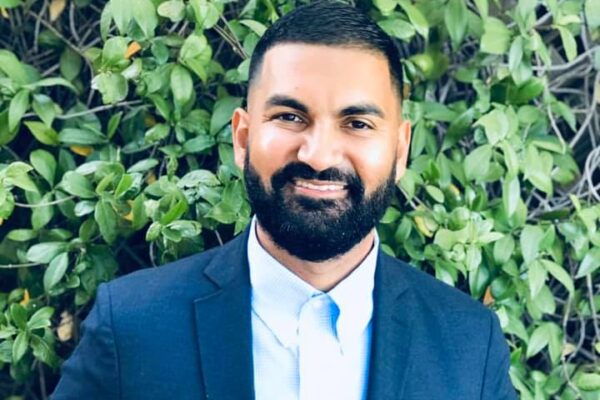
Athar Haseebullah, Executive Director of ACLU, NV